Sales training website
Built for closures others can't handle.
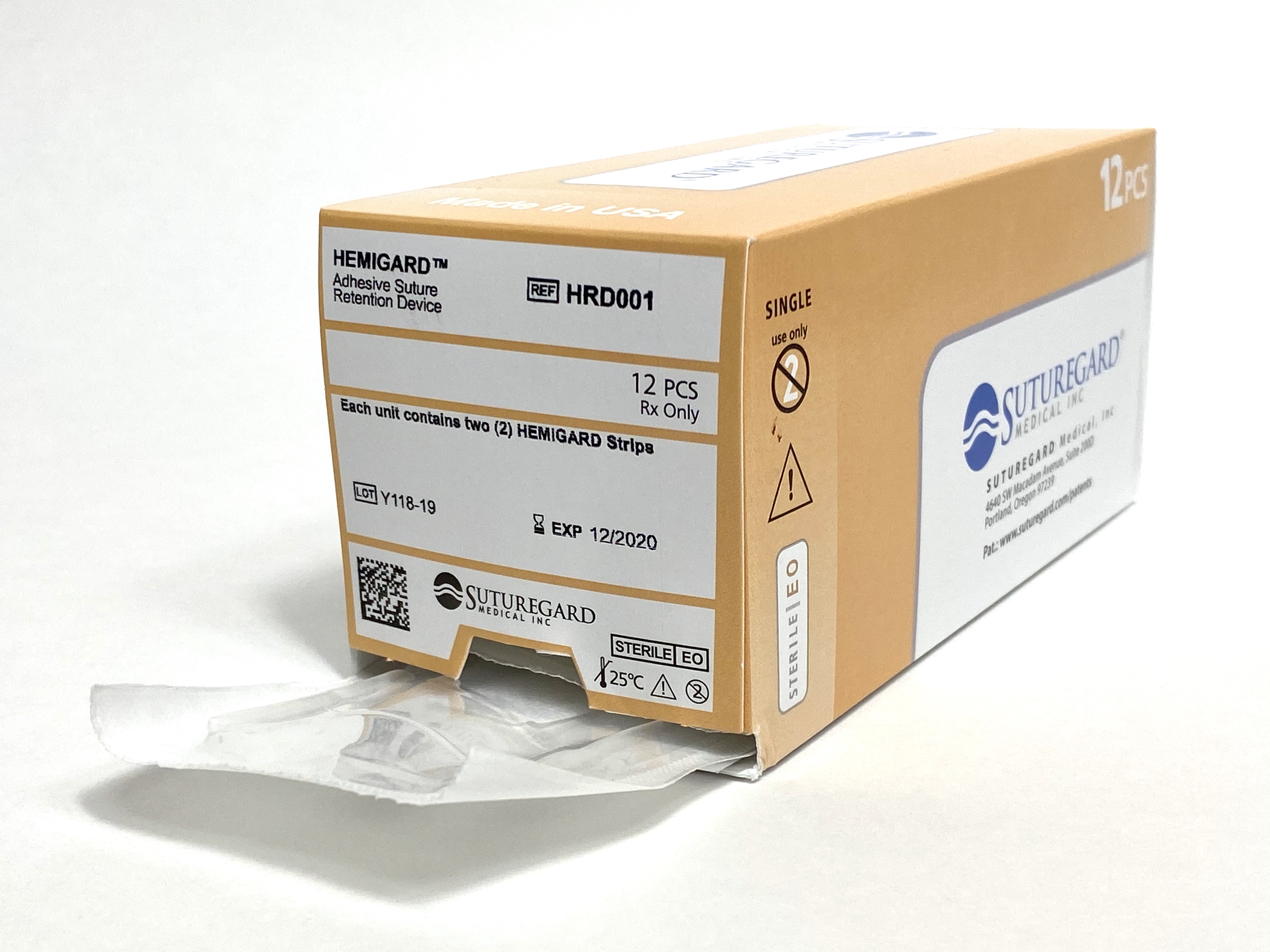
The opportunity
Why Sell SUTUREGARD ASRD?
Surgeons deal with product problems every day—broken screws, failed implants, difficult cases, and unhappy outcomes.
SUTUREGARD is different.
It's simple to use, solves a real problem, and delivers an immediate, visible benefit: helping surgeons close wounds that would otherwise be difficult or impossible to close under tension.
Why reps love it
Makes surgeons' lives easier.
Creates positive case experiences.
Helps you build stronger relationships with existing customers.
Opens doors to new surgeons and accounts.
Gives you a product that puts a smile on your surgeon's face.
When your surgeon wins, you win. SUTUREGARD is a simple solution that makes a big impact.
Video library
Start Here
The full 10-minute training covers clinical context, technique, and outcomes — required viewing for all reps.
Videos — test your knowledge
Q1.In the 10-minute video, you learned that NPWT and Zipper-type devices (Zip by Stryker) prevent wounds from re-opening (dehiscence). True or False?
Q2.What is the ASRD Look Book 2?
Q3.Under tension, products like steri-strips and Zip by Stryker can cause skin blistering. True or False?
Instructions for use
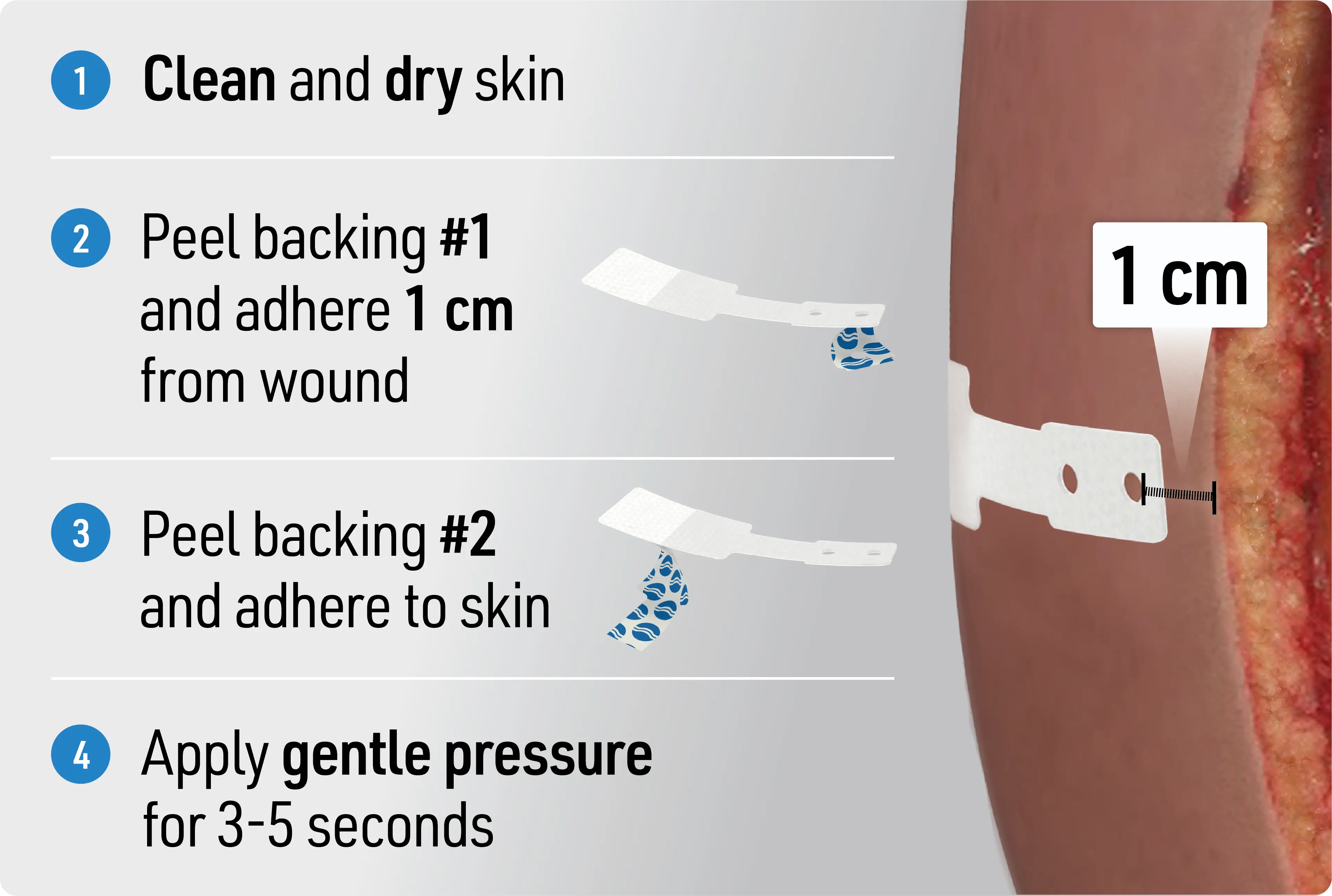
How to apply ASRD — four steps
How to apply — test your knowledge
Q1.How far from the wound edge should each strip be placed?
Q2.A “full-thickness” suture passes through…
Brand context
ZONAL® Technology — This is what makes the ASRD one-of-a-kind.
SUTUREGARD® ASRD is engineered to offload tension, maintain proper blood flow, and minimize wound complications through its proprietary ZONAL® Technology — three differentiated zones, each doing a specific job.
The ZONAL® Technology is what makes the ASRD novel. There is no other product that can do what the ASRD does — close the un-closable and keep them closed. The ASRD truly is Built for closures others can't handle.
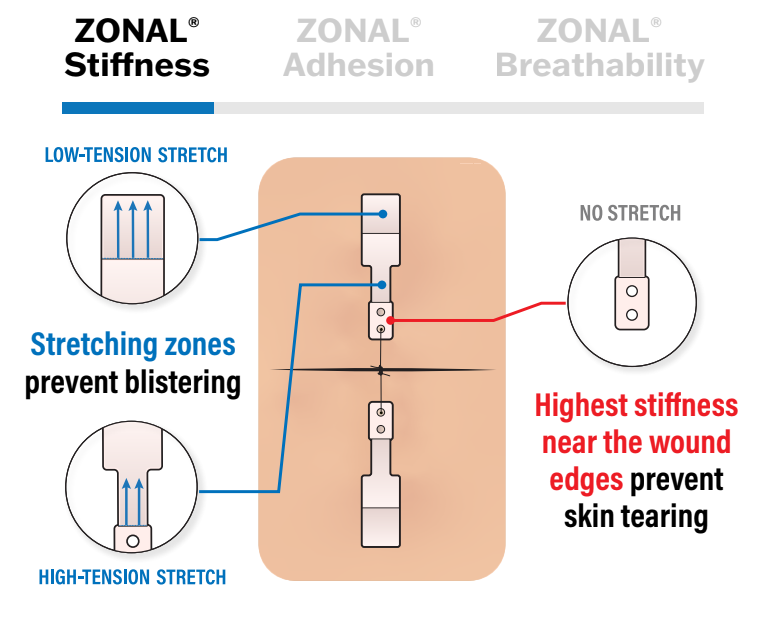
ZONAL® Stiffness
Stiff near the wound for structural support — while ends stretch to prevent blistering at the skin interface.
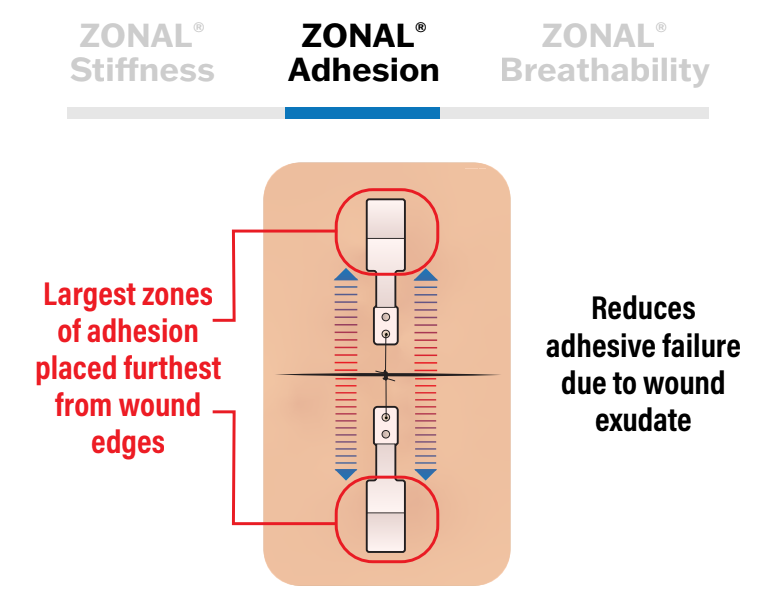
ZONAL® Adhesion
Largest adhesive area is furthest from the wound edge — ensuring strong retention to intact skin without compromising the incision site.
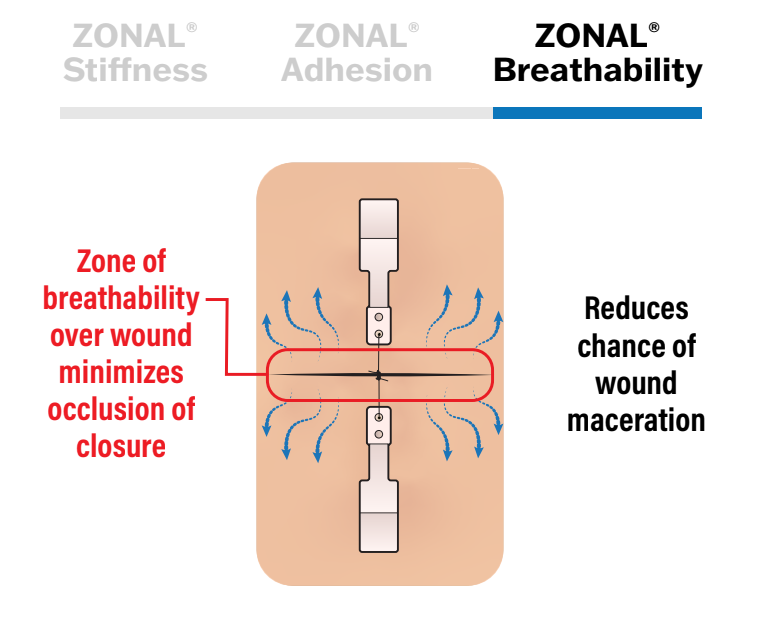
ZONAL® Breathability
Minimal incision coverage prevents maceration — keeping the wound environment healthy throughout the retention period.
Quick Facts for Reps
For high-tension, high-stress surgical wound closure
Offloads stress from standard nylon suture
Up to 10 lbs / 40N of tension offloading
Available for vertical or horizontal mattress suturing
Self-adhesive — no Mastisol or benzoin needed
Latex-free, trim-to-fit plastic portion
ZONAL® Technology — test your knowledge
Q1.What makes the ASRD novel?
Q2.Where is the largest adhesive area of the device?
Evidence overview
Key Clinical Outcomes
Compared to standard closure with suture alone:
- 80% reduction in dehiscence
- 25% improved blood flow
- 2-week earlier weight-bearing in TARs
- Reduced skin tearing and blistering
- Reduced to zero undermining needed
- Close the “UNCLOSABLE!”
Evidence — test your knowledge
Q1.What is dehiscence?
Q2.Which three outcome categories should reps lead with?
Procedure targeting
Broad Range of Procedures
The goal of every rep conversation is to widen where a surgeon reaches for ASRD.
Surgeons move from reactive users — reaching for ASRD when a wound is in trouble — to proactive users who put it on their preference card. The fuller the indication list a rep can speak to, the faster that shift happens.
Proactive users reach for the ASRD more often.Full range of clinical indications
All procedures current surgeon customers report using ASRD
Procedure targeting — test your knowledge
Q1.A rep wants to move a surgeon from a reactive user to a ___ user.
Q2.Why does speaking to a fuller indication list matter?
Clinical photography
ASRD in action
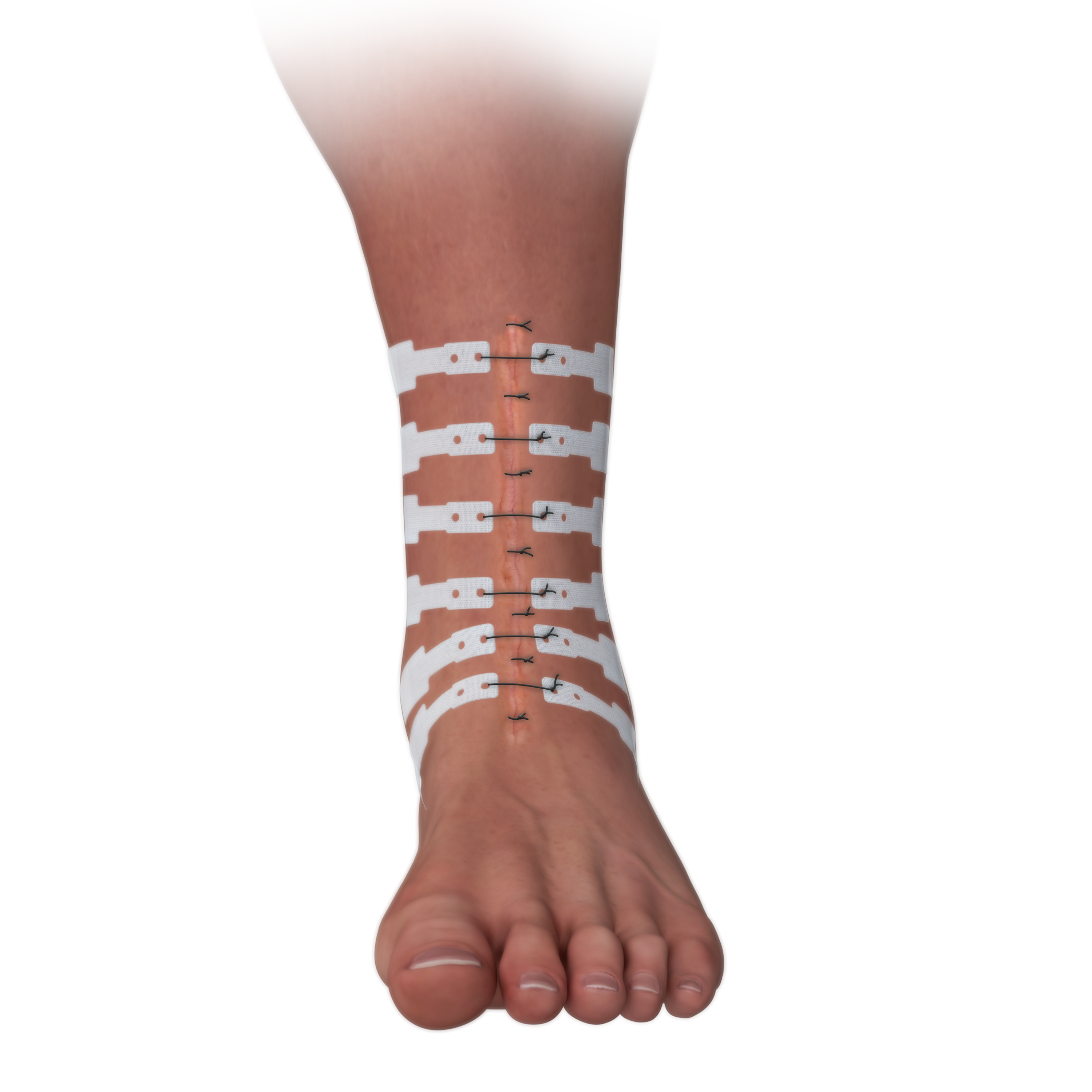
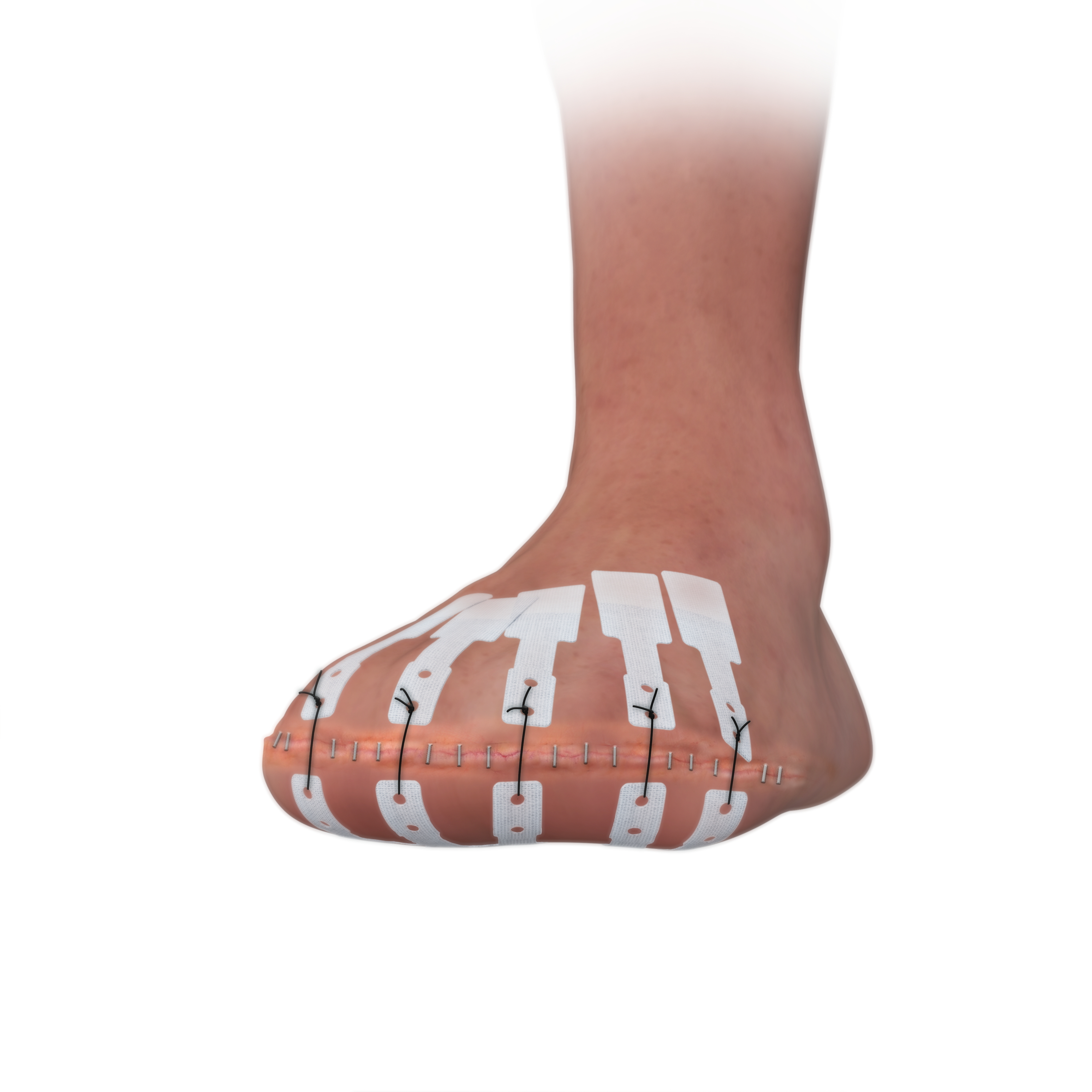
Procedure photography showing ASRD application in total ankle replacement and transmetatarsal amputation.
ASRD in action — test your knowledge
Q1.What is the recommended density of ASRD use?
Q2.Where should you place the first ASRD?
Product specifications
ASRD specifications & ordering
Everything reps need before a sales call — pack size, sterility, shelf life, and how to direct pricing inquiries.
Pack Size
Box of 1212 devices per box. The average number of strips (devices) used is 4 per case.
Sterility
SterileIndividually packaged and sterile-field ready. No additional preparation required.
Material Safety
HypoallergenicHypoallergenic and latex-free — suitable for patients with sensitive skin or latex allergies.
Shelf Life
3 YearsThree-year shelf life from manufacture date. Check lot number for expiration before use.
For pricing information or to request a quote, contact jen@suturegard.com
Specifications & ordering — test your knowledge
Q1.How many devices come in a box?
Q2.What is the shelf life, and who handles pricing quotes?
Reimbursement
Reimbursement Basics
The ASRD is a retention device used to facilitate closure of high-tension wounds. Because retention sutures are specifically recognized within the CPT® complex repair framework, the 131XX Complex Repair family may be relevant when documentation supports the additional work required for closure.
Commonly referenced codes
- 13131–13133: Complex repair of trunk or extremities (including foot and ankle), used when closure requires more than a simple layered repair.
- 13160: Secondary closure of a surgical wound or wound dehiscence when additional intervention is required to achieve closure.
Examples
| Clinical Scenario | Potential CPT Code | Estimated Medicare Facility Payment (2025) |
|---|---|---|
| Delayed closure of a dehisced Achilles wound | 13160 – Secondary closure of surgical wound, extensive or complicated | $792.64 |
| Complex foot or ankle closure (1.1–2.5 cm) | 13131 – Complex repair of feet | $240.00 |
| Complex foot or ankle closure (2.6–7.5 cm) | 13132 – Complex repair of feet | $298.85 |
| Additional length beyond 7.5 cm | 13133 – Each additional 5 cm or less | +$122.55 per segment |
| Example: 10 cm complex foot/ankle closure | 13132 + 13133 | $421.40 |
Competitive landscape
ASRD Fills a Critical Gap in High-Tension Wound Closure
How SUTUREGARD ASRD compares to other closure and incision-management devices on the capabilities that matter most in high-tension, fragile-skin closures.
| Category | SUTUREGARD ASRD | NPWT / NPseal | Brijjit | SYLKE | Clozex | Zip |
|---|---|---|---|---|---|---|
| Enables closure under high tension | Yes | No | No | No | No | No |
| Protects against suture cut-through in fragile skin | Yes | No | No | No | No | No |
| Helps with approximation | Yes | No | No | No | Minimally, only superficial | Minimally, only superficial |
| Prevents dehiscence in orthopedics | 79%+ | Cochrane review says "no support" | No supporting data | No supporting data | No supporting data | No supporting data |
SUTUREGARD ASRD is the only device specifically designed to enable and protect high-tension surgical wound closure in fragile skin and to prevent and manage dehiscence in the orthopedic market.
Field handling & application
Rep and Surgeon FAQs
The essentials reps need to answer questions in the field.
| Question | Answer |
|---|---|
| How is this different from standard closure? | ASRD offloads wound tension during closure, reducing dehiscence, healing time, and weight-bearing time. |
| Where is it placed? | About 1 cm from the wound edge on clean, dry skin, aligned symmetrically. |
| Do I need extra adhesive? | No. ASRD is self-adhesive. Avoid Mastisol, benzoin, and skin preps — they reduce adherence. |
| What suture types are recommended? | 2-0 nylon is most common; 0 nylon for highest tension. Absorbables are discouraged. |
| How many should I use? | One device per inch of incision — averaging 4 strips per case. |
| How long does it stay in place? | 2 to 6 weeks, depending on healing progress and patient risk factors. |
| How is it removed? | Peel gently to the side rather than lifting vertically to protect skin integrity. |
| Can it be used with biologics or VAC? | Yes. Prevent VAC dressing removal from pulling the fabric during dressing changes. |
| Do sutures pass through both skin and device? | Yes. Use full-thickness, symmetric suture bites to prevent shear forces and ensure proper alignment. |
| Why does the device include two suture holes? | To accommodate multiple suture techniques, including simple interrupted and vertical mattress (far-far-near-near) configurations for optimal tension relief and skin eversion. |
| What adhesive is embedded in the ASRD? | A proprietary hypoallergenic acrylic adhesive, identical to that used in long-term Dexcom glucose monitors. No allergic reactions have been reported. |
| Are deep sutures required? | Not beneath the ASRD. Low-tension deep sutures may be placed between devices for skin alignment only, but many ASRD surgeon users no longer use deep sutures to de-tension the wound (the ASRD does that for them). Remember, the ASRD is placed before any other sutures when closing the skin. |
| Is the device latex-free? | Yes. |
| When may patients shower? | After one week. Avoid soaking or submersion. |
| What dressings may be placed over HEMIGARD? | Any non-oily dressing. Avoid Adaptic, Xeroform, or tape directly on the device. |
FAQs — test your knowledge
Q1.A surgeon asks if they need extra adhesive like Mastisol. The correct answer is…
Q2.How long does ASRD typically stay in place?